AI

AI, Product Management

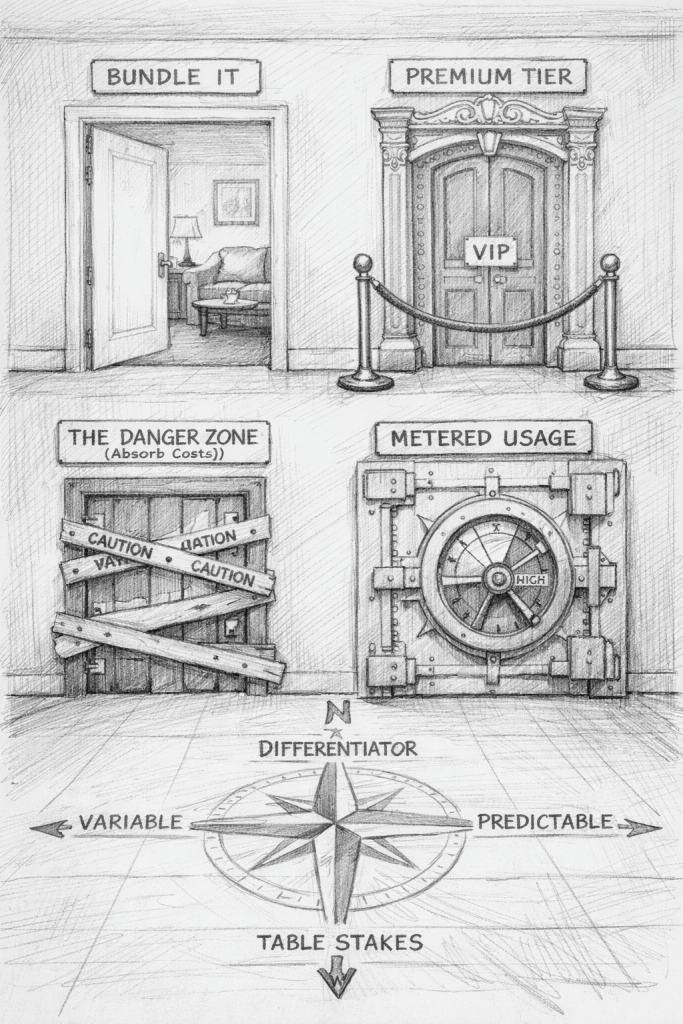
THE ECONOMICS OF INTELLIGENCE: A FRAMEWORK FOR PRICING AI FEATURES

Stop guessing how to price AI. Use this 4-quadrant framework to map value against cost, protect your margins, and monetize outcomes effectively. Excerpt: If you attempt to pass on AI costs simply because your compute bill increased, you are operating with a utility mindset. Here is how to map your AI features against “Competitive Necessity” and “Cost Structure” to build a winning pricing strategy.

AI

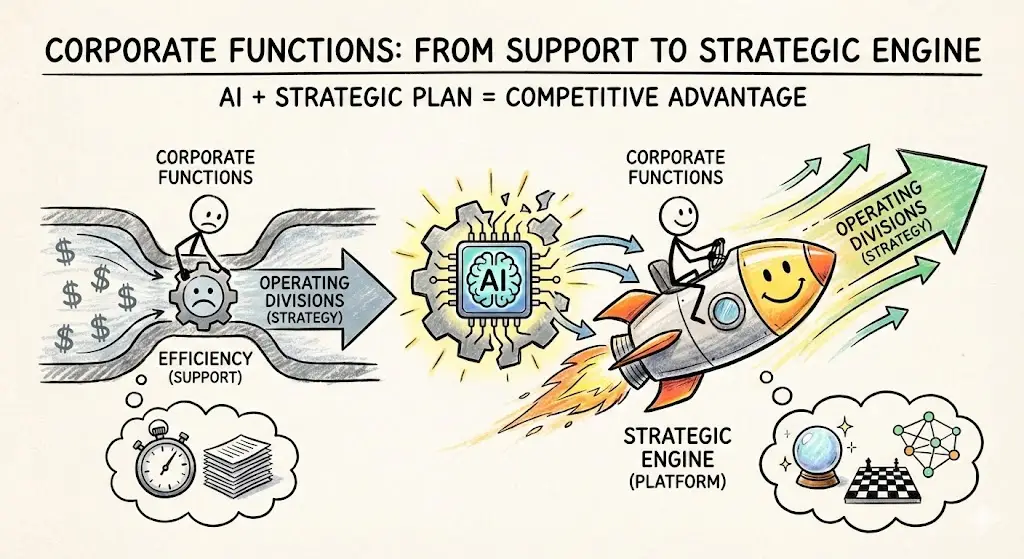
Corporate Functions Don’t Need Efficiency Plans. They Need Strategic Plans.

AI is flipping the old hierarchy that treated HR, Finance, Legal, and IT as overhead. When coordination and routine knowledge work become cheap, efficiency stops being the prize. Corporate functions must plan like operating divisions, building AI-native platforms that create defensible advantage and prevent the firm from drifting into hollow bureaucracy.

AI, Board of DIrectors, culture

Are We Living in a Golden Age of Stupidity? Why AI Is Making Us Dumber and What Leaders Can Do About It

New MIT research reveals a disturbing truth: when we use AI to think for us, our brains literally shut down. We’re entering a “stupidogenic society” where technology erodes our ability to think critically, remember information, and reason independently. For business leaders, the question isn’t whether to adopt AI—it’s how to deploy it without destroying your workforce’s most valuable asset: their ability to think.

AI

The Prompt Collapse: Why Natural Language Interfaces Are About to Eat Traditional Software

The end of software as we know it has already started. For decades, we believed learning the interface was part of the job—memorizing commands, clicking through menus, mastering shortcuts. That belief just died. With natural language interfaces, the barrier between human intent and computer execution disappears. You don’t “use” software anymore. You talk to it. The result: an entire industry built on complexity is about to collapse, and the winners will be those who know what good looks like, not how to make it.

AI

The Memory Wars: How AI Context Windows Are Becoming the New Platform Battleground

AI’s next platform war isn’t about model size or processing speed—it’s about memory. Just as RAM defined computing power and browser share determined internet dominance, context window size is now defining the boundaries of AI usefulness. But the true battle isn’t technical; it’s relational. Whoever controls the persistence layer—the memory that spans conversations, projects, and personal context—will own the future of human-AI collaboration.

From Claude’s 200K tokens to Gemini’s 2M window, context is fast becoming the new real estate of knowledge work. Each interaction builds relationship equity, compounds value, and raises switching costs. The “Memory Wars” have already begun, reshaping how we work, create, and even think. The question isn’t whether you’ll need AI that remembers—it’s whether you’ll own that memory, or it will own you.

AI

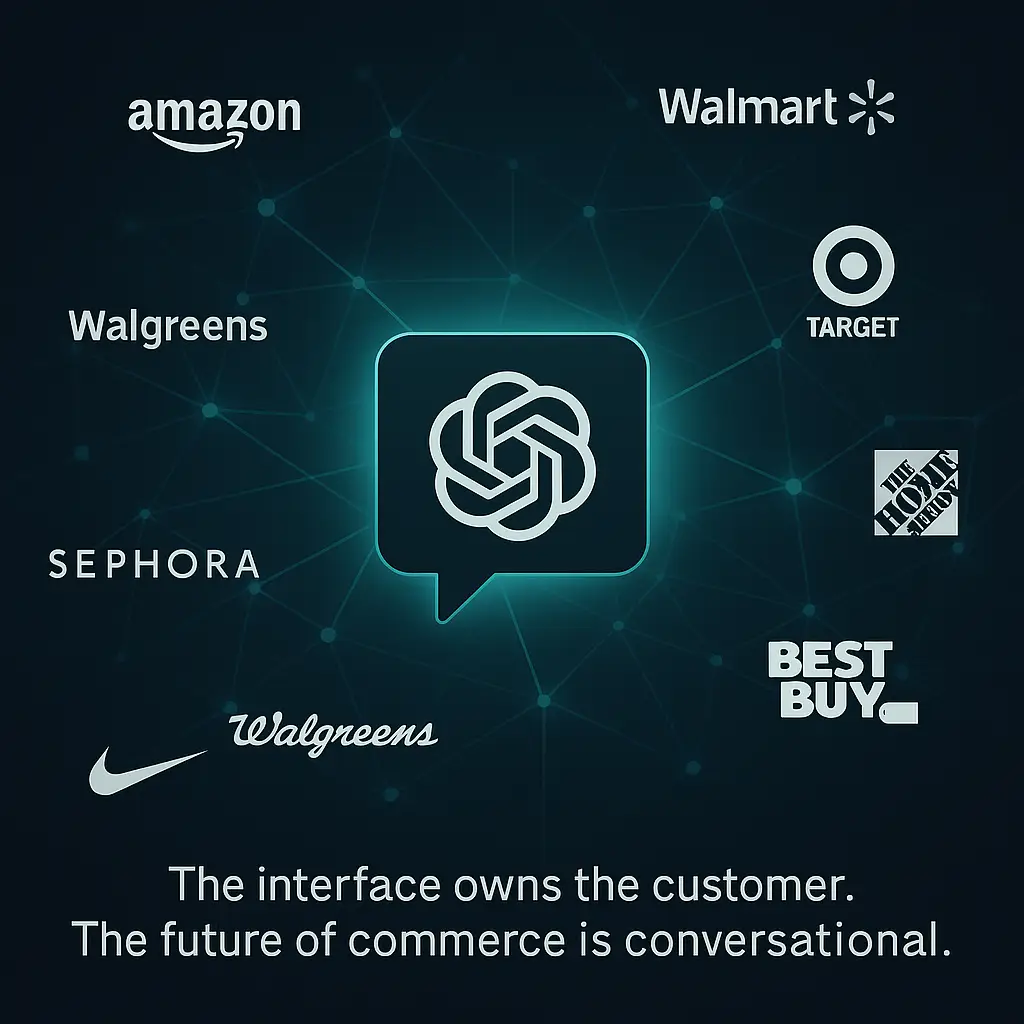
Walmart and OpenAI Just Changed the Future of Shopping: What This Means For All Retailers

Walmart’s partnership with OpenAI isn’t just a clever new feature—it’s a rewiring of online shopping. With Instant Checkout inside ChatGPT, the “search → click → cart” ritual gives way to briefing an AI agent that can recommend, assemble, and purchase in one conversation. This piece explains why that shift matters: how intent aggregation changes discovery, why apps become backends, and how Agent Interface Optimization (AIO) replaces SEO for transactional queries. It also offers a pragmatic 18-month playbook—what to expose via APIs, how to structure product data, what to measure (agent-originated revenue, AI conversion), and where to build moats (fulfillment reliability, trust signals, first-party datasets). If you lead e-commerce, retail media, D2C growth, or product/ops, this is your field guide to competing for inclusion in the AI shelf—and doing it profitably

AI

How to Prove AI ROI When the Value is Mostly Productivity, Not Revenue

Struggling to justify AI investments that boost productivity but not direct revenue? This guide provides a proven framework to quantify time savings, calculate the return on investment for your AI tools, and demonstrate the tangible business impact of your AI initiatives, even when direct revenue gains aren’t the primary metric.

AI

The Anti-Use Case: Why Subtraction Improves AI Traction

Most companies confuse “more” with “momentum.” They pile up AI use cases like trophies on a shelf—impressive to look at, useless to execute. Real traction doesn’t come from adding, it comes from subtracting. By filtering through a framework that balances build vs. buy, partner fit, data moat potential, and business relevance, leaders can focus on the few initiatives that compound into durable advantage. Subtraction isn’t the death of innovation. It’s the discipline that makes innovation matter.

AI, Product-led Growth

The Funnel is Dead: How AI is Forcing a Revolution in Product-Led Growth

The classic SaaS funnel is obsolete. AI is replacing the leaky, linear model with a single, intelligent conversation that delivers value from the very first touch. For product builders, this shift represents the single greatest opportunity to build a modern, resilient growth engine. Learn the essential principles—from delivering “Day Zero Value” to building a proactive AI partnership—to stop patching a broken system and start building the future of product-led growth.

AI

When AI Turns Your Competitive Moat into Quicksand: Chegg’s Freefall and the Ominous Signal for Every Information Business

In May 2023, Chegg’s market value was sliced in half practically overnight. The culprit? ChatGPT. This post breaks down how the EdTech giant’s seemingly impenetrable moat turned to quicksand and reveals the urgent, non-obvious lessons for any business built on proprietary information in the age of AI. Learn the three critical questions you need to ask now before your value proposition becomes obsolete.

AI, Board of DIrectors, culture, growth, Innovation, Leadership

The Innovation Paradox: Why Organizations Resist the Future They Say They Want

In conference rooms across corporate America, a peculiar ritual unfolds daily. Executives speak passionately about “digital transformation” and “AI-first strategies,” nodding earnestly as consultants present frameworks for organizational change. Then, when the PowerPoint slides fade and the real work begins, these same organizations deploy an arsenal of processes, committees, and approval workflows that make meaningful innovation nearly impossible. This isn’t hypocrisy—it’s something more interesting. It’s the institutional equivalent of a person who desperately wants to learn to swim but refuses to get in the water because it might be dangerous.

Scroll to Top