

If you manage software products today, you are likely wrestling with a frustrating paradox. Your engineering teams are incredibly talented, your internal demos look spectacular, and your organization has dozens of AI pilots in mid-flight.
Yet, weeks turn into months, and almost nothing crosses the line into production. You are stuck in pilot fatigue.
The culprit isn’t a lack of compute or engineering talent. It’s a failure of definition.
When moving from traditional software to AI, the core job of product management shifts from specifying explicit logic to defining statistical boundaries. If you use a legacy software checklist to launch an AI feature, your buttons will click flawlessly, your APIs will return code 200 OK, and your product will still fail completely in production. You will fall victim to Invisible Enterprise Syndrome: a chaotic web of black-box models making unmonitored decisions, patched together by “human middleware” (stressed-out operations teams manually fixing the AI’s edge-case mistakes).
To scale AI successfully, we need to completely overhaul the Product Manager’s ultimate contract: the Definition of Done (DoD).
Part 1: What Traditional Product Management DoD Documents Look Like
In standard software engineering, a Definition of Done document is a binary checklist. Because code is deterministic (Inputs + Logic = 100% Predictable Output), “Done” means verifying that the logic is sound and the rails are built.
A standard enterprise PRD (Product Requirement Document) or engineering DoD checklist typically looks like this:
1. Functional Requirements (The “Acceptance Criteria”)
- Behavior: The system meets all User Stories outlined in the ticket (e.g., “As a user, when I click ‘Export,’ a CSV downloads within 3 seconds”).
- Edge Cases: Error states are handled explicitly (e.g., if the database is down, show a clean
404or500error page with a retry button).
2. Technical Quality & Testing
- Code Quality: Code passes peer review, matches styling guidelines, and is merged into the main branch.
- Unit & Integration Tests: Automated test suites run. The feature must achieve a specific code coverage metric (e.g., 80% of lines tested). If a test fails, the build breaks.
- Regression Testing: Verifies that this new code did not break any pre-existing features in the software stack.
3. Performance & Security
- Load Testing: The feature can handle a designated volume of concurrent users (e.g., 10,000 requests per minute) without latency spiking past a strict SLA (e.g., under 200ms).
- Security Scanning: Code passes static analysis (SAST) to ensure no vulnerabilities or hardcoded API keys are pushed.
4. Documentation & Release Readiness
- Internal: API documentation (Swagger/OpenAPI) is updated. Architecture diagrams are logged in the team wiki.
- External: Release notes are drafted, and customer support documentation is ready.
Part 2: The AI Add-Ons: What We Must Stack On Top and Why
If you apply only the traditional checklist above to an AI project, your build will pass, your code will be beautiful, your buttons will click flawlessly: and your product will still fail completely in production.
Because AI is probabilistic (the same input can yield different outputs, and the system “thinks” rather than follows strict logic loops), we must layer four new dimensions directly on top of the traditional foundation.
┌─────────────────────────────────────────────────────────────────┐
│              THE ENTERPRISE AI DoD STACK                        │
├─────────────────────────────────────────────────────────────────┤
│ 4. OPEX & ECONOMICS LAYER (Token caps, cache hits, ROI tracking)│ ◄── NEW (AI)
├─────────────────────────────────────────────────────────────────┤
│ 3. TRUST & COMPLIANCE LAYER (PII scrubbing, bias, red-teaming)  │ ◄── NEW (AI)
├─────────────────────────────────────────────────────────────────┤
│ 2. EVALUATION & QUALITY LAYER (Golden Sets, LLM-as-a-Judge)     │ ◄── NEW (AI)
├─────────────────────────────────────────────────────────────────┤
│ 1. TRADITIONAL DETERMINISTIC FOUNDATION                         │
│    (Code reviews, unit tests, UX buttons, API documentation)    │ ◄── TRADITIONAL
└─────────────────────────────────────────────────────────────────┘
Layer 1: Evaluation & Quality (Replaces Simple “Unit Tests”)

- What we add: A dynamic Golden Dataset (100+ vetted enterprise inputs/outputs) and automated programmatic evaluations (metrics like BERTScore, G-Eval, or an LLM-as-a-Judge setup).
- Why we add it: Traditional unit tests check for exact strings or status codes. They cannot evaluate if an AI’s 500-word synthesis of a legal contract is accurate, misleading, or completely fabricated. “Done” means the model passes an automated semantic accuracy threshold against your benchmark dataset.
- The PM Tradeoff Framework: As a PM, you must tune parameters based on the business cost of an error. Your DoD must explicitly state whether the application prioritizes Precision (avoiding false positives) or Recall (avoiding false negatives):
$$\text{Precision} = \frac{\text{True Positives}}{\text{True Positives} + \text{False Positives}}$$
$$\text{Recall} = \frac{\text{True Positives}}{\text{True Positives} + \text{False Negatives}}$$
Layer 2: Behavioral Guardrails & Red-Teaming (Replaces Simple “Error States”)
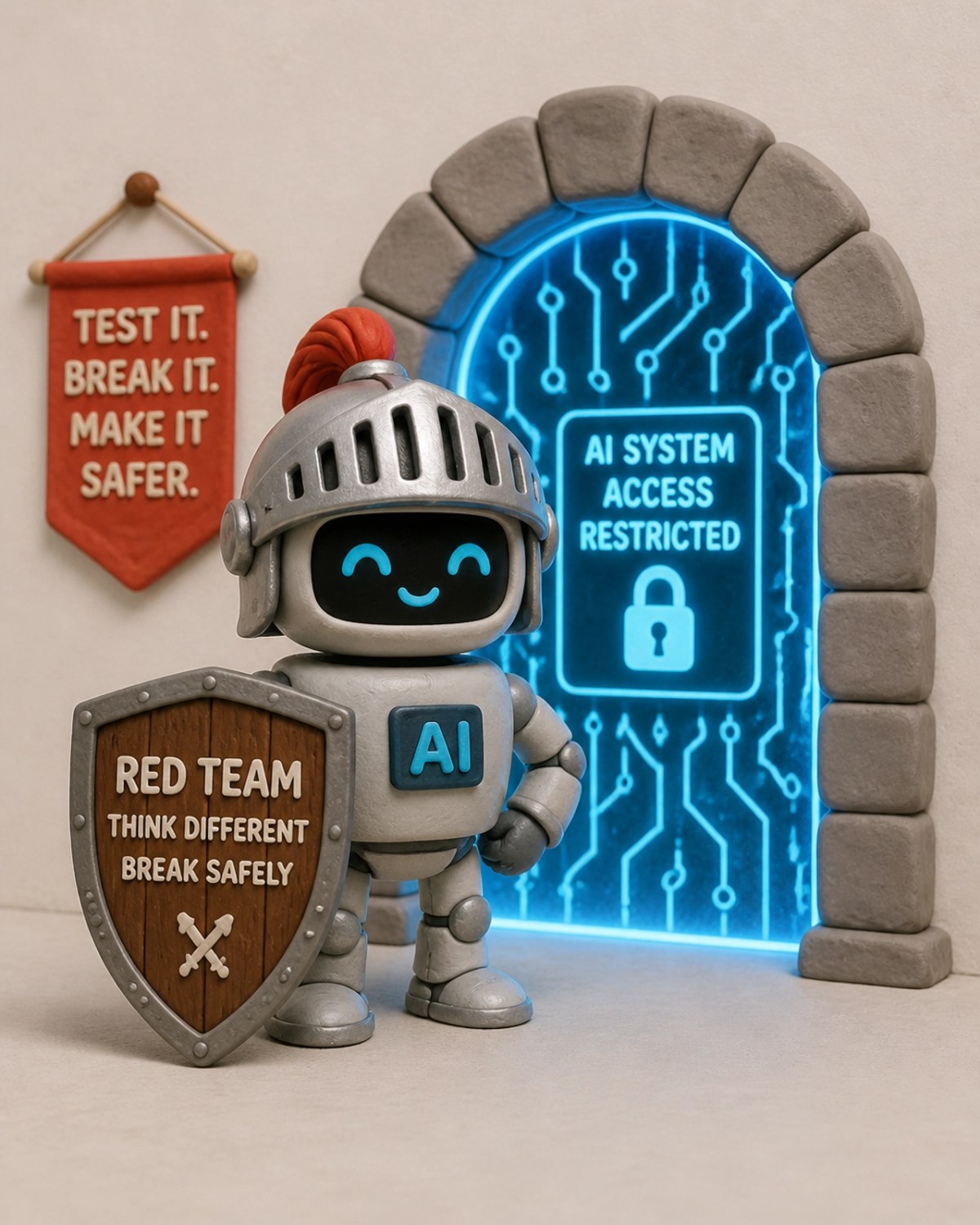
- What we add: Jailbreak resistance testing, automated PII (Personally Identifiable Information) anonymization filters on input, and toxic content scanners on output.
- Why we add it: In traditional software, a user cannot type a prompt that tricks a login page into giving them the company’s entire database. In AI, prompt injection is an existential threat. A user can trick an agent into bypassing its corporate rules. “Done” means the system has been actively red-teamed (attacked) and has programmatic guardrails to catch bad inputs and malicious outputs before they reach the user.
Layer 3: Architectural & Routing Efficiency (Replaces Simple “API Integration”)
- What we add: Model tiering matrices, semantic caching, and strict fallback routing.
- Why we add it: Traditional APIs are cheap and fast. AI models are slow, expensive, and subject to severe rate limits. If your engineers route a basic sentiment analysis task to an expensive frontier model like GPT-4o, your unit economics collapse. “Done” means the architecture explicitly routes simple tasks to small, local models (like a fine-tuned 8B parameter model) and reserves expensive frontier models only for complex reasoning.
Layer 4: Token Economics & Cost Caps (Replaces Standard “Hosting Costs”)

- What we add: Runaway agent circuit-breakers and input context optimization rules (pruning prompts so you don’t send irrelevant data).
- Why we add it: Traditional code doesn’t suddenly cost $500 because an execution loop ran a few extra times. An autonomous AI agent caught in an infinite loop can burn through thousands of dollars in minutes by constantly calling frontier APIs. “Done” means hard programmatic token limits and financial circuit-breakers are coded into the application layer.
Part 3: Turning the Checklist into Code-Based Enforcement
A Definition of Done is completely useless if it sits in a PRD or a wiki document that no one reads. For an AI product manager, “Done” means these criteria are explicitly written into the engineering pipeline.
- The CI/CD Gatekeeper Rule: Every AI feature must have a corresponding automated evaluation script baked into the continuous integration (CI/CD) deployment pipeline. If an engineer’s prompt tweak drops the Golden Set evaluation score below your target threshold, the build fails automatically. No exceptions. This ensures total visibility into AI performance.
- Perceived Latency Management: If Time-to-First-Token (TTFT) delays exceed 1.5 seconds, the feature is Not Done until the UI implements token-streaming (via Server-Sent Events) or step-by-step agent reasoning readouts to prevent user abandonment.
- The Human Fallback Gatekeeper: The UX must have a structural escape hatch. If the model’s internal confidence score drops below an established statistical threshold (e.g., Confidence $< 0.75$), the UI must bypass the automation completely and gracefully route the transaction to a human-in-the-loop review queue to make every decision count.
The New “Done” Contract
The takeaway for product leaders is simple. The definition of success has completely inverted:
Traditional software is “Done” when it works as coded.
Enterprise AI is “Done” when it behaves as expected, safely, and within economic boundaries.
The next time your engineering team brings you an AI demo and asks for permission to launch, do not just applaud the technology. Treat that demo as the exact moment you pull out the new multi-dimensional stack and ask: “It looks great: but is it truly Done?”


